Why Does My Drain Keep Clogging? When It’s Time to Call a Plumber
A drain that keeps clogging may be more than a one-time nuisance. Learn what recurring drain problems can indicate, what signs to watch for, and when it makes sense to have the plumbing evaluated.
Why Does My Drain Keep Clogging? When It’s Time to Call a Plumber
A clogged drain is one of the most common plumbing problems homeowners deal with. Sometimes the cause is straightforward—hair, soap buildup, food debris, grease, or another obstruction close to the fixture.
But when you clear a clog and it keeps coming back, there may be more going on.
At Cross County Plumbing & Drain, we help homeowners throughout Nocatee, Ponte Vedra, St. Johns, the Jacksonville Beaches, St. Augustine, and surrounding Northeast Florida communities with recurring drain problems, drain cleaning, and sewer-line concerns.
The location and pattern of the problem can provide useful clues about what may be happening inside the plumbing system.
One Clogged Drain vs. Multiple Clogged Drains
One of the first things to notice is how many fixtures are affected.
If one bathroom sink is draining slowly while everything else in the house is working normally, the blockage may be relatively close to that fixture.
If several fixtures begin draining slowly or backing up around the same time, the issue may be farther downstream in the plumbing system.
For example, a homeowner may notice that:
the shower drains slowly,
a nearby toilet begins acting differently,
water backs up in another fixture,
or multiple drains throughout the house are affected.
That does not automatically tell you exactly what is wrong, but it is important information to share with your plumber.
Why Does the Same Drain Keep Clogging?
A drain that repeatedly needs attention can have a number of possible causes.
Over time, material can accumulate inside a drain line and gradually restrict the opening. In other situations, an object may be lodged inside the pipe, or the problem may involve the condition or configuration of the piping itself.
The key is determining why the clog keeps returning.
Repeatedly clearing the same drain without understanding the underlying cause may temporarily restore flow without resolving the actual problem.
What About Store-Bought Drain Cleaners?
When a sink or shower stops draining properly, it can be tempting to reach for a bottle of chemical drain cleaner.
That may not address the underlying cause of a recurring clog, especially when the same fixture continues to experience problems.
If basic homeowner maintenance has not corrected the issue—or the blockage keeps returning—it may be time to have the drain professionally evaluated.
The appropriate solution depends on the location of the blockage, the plumbing system, and what is actually causing the restriction.
When Can a Sewer Camera Inspection Help?
Some drain and sewer problems cannot be identified simply by looking at the fixture.
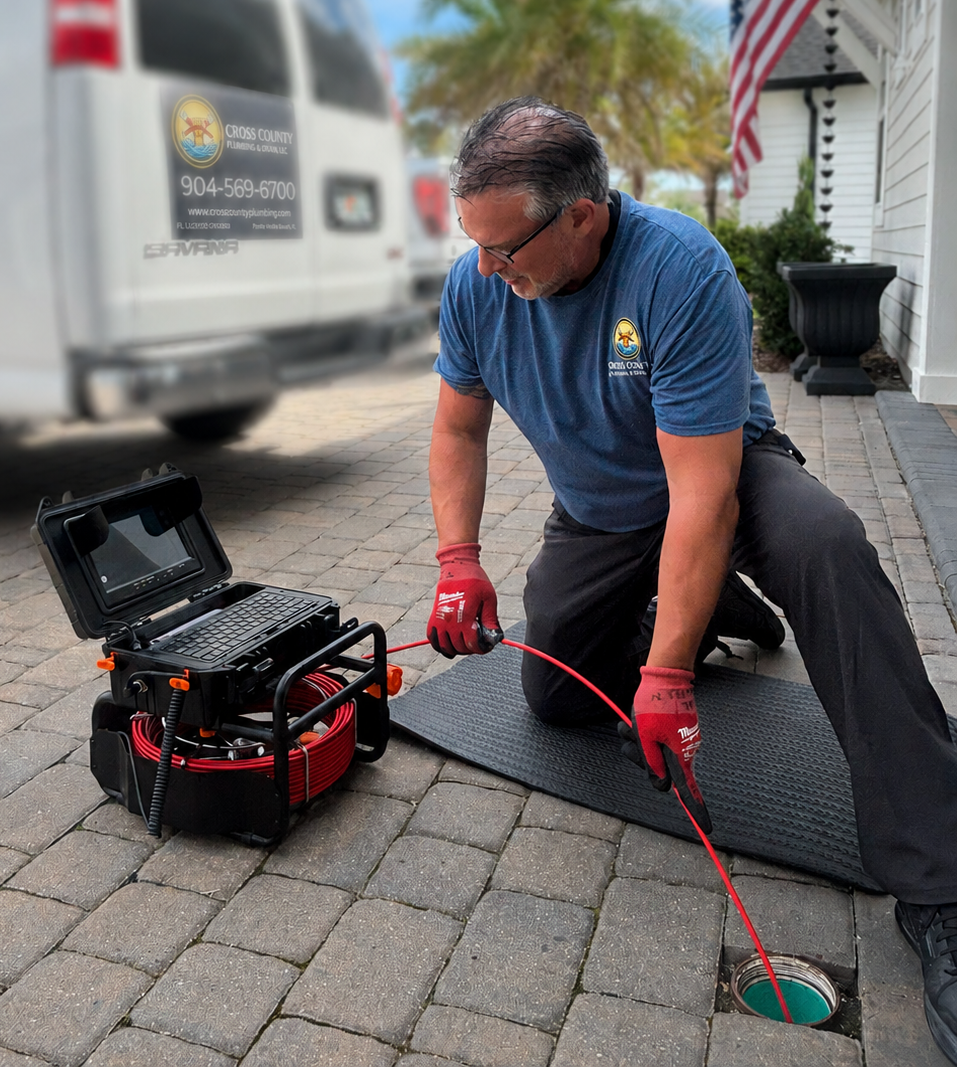
When appropriate, a sewer camera can allow a plumber to inspect the interior of a drain or sewer line and gather more information about its condition.
A camera inspection may be useful when:
a drain problem repeatedly returns,
multiple fixtures are affected,
the condition of an underground line is unknown,
or additional information is needed before determining the next step.
A camera is a diagnostic tool—not every clogged drain requires one—but it can be valuable when the source of a recurring problem is not obvious.
Warning Signs You Shouldn't Ignore
An occasional slow drain may not always require immediate professional service. But some symptoms deserve closer attention.
Consider having the plumbing evaluated if you notice:
the same drain repeatedly clogging,
several slow drains at once,
water backing up into another fixture,
unusual gurgling or bubbling from drains,
persistent sewer odors,
or sewage backing up into the home.
A sewage backup should be addressed promptly because it can create both plumbing and sanitation concerns.
The Goal Is to Find the Cause
When a drain problem keeps returning, the goal should not simply be to get the water moving again.
The better question is:
Why does this keep happening?
Bryan can evaluate the symptoms, determine what additional troubleshooting may be appropriate, and explain the available options before work is performed.
Cross County does not try to diagnose unknown plumbing problems or quote repairs over the phone without first understanding what is actually happening at the property.
Need Help With a Recurring Drain Problem?
Cross County Plumbing & Drain provides drain cleaning and sewer services for homeowners throughout Nocatee, Ponte Vedra, St. Johns, Jacksonville Beach, Neptune Beach, Atlantic Beach, St. Augustine, and surrounding Northeast Florida communities.
If a drain keeps clogging, backing up, or simply isn't working the way it should, we can help determine what is causing the problem.
Call Cross County Plumbing & Drain at 904-569-6700 or visit crosscountyplumbing.com to learn more about our plumbing services.
Florida Certified Plumbing Contractor — CFC1434349
When Should You Repair or Replace Your Water Heater? A Northeast Florida Homeowner’s Guide
When Should You Repair or Replace Your Water Heater? A Northeast Florida Homeowner’s Guide
When your water heater starts acting up, one of the first questions is usually: Should I repair it or replace it?
At Cross County Plumbing & Drain, we help homeowners throughout Northeast Florida with water heater service, repair, and replacement.
Sometimes the answer is simple. A relatively new water heater with one repairable component may have plenty of useful life left. Other times, putting more money into an older unit only delays the inevitable—and can leave you dealing with no hot water or a leak at the worst possible time.
At Cross County Plumbing & Drain, we help homeowners throughout Nocatee, Ponte Vedra, St. Johns, the Beaches, and surrounding Northeast Florida communities evaluate their water heaters and understand the options before deciding what makes sense.
Here are some of the things Bryan looks at when helping a homeowner decide whether to repair or replace a water heater.
How Old Is Your Water Heater?
Age is one of the first things to consider.
ENERGY STAR recommends that homeowners begin thinking about replacement when a traditional water heater is more than 10 years old, rather than waiting until the unit fails unexpectedly.
That does not mean every 10-year-old water heater automatically needs to be replaced. A well-performing unit may continue working beyond that point. But once a water heater reaches that age, repairs deserve a little more scrutiny.
If the tank is older and beginning to experience multiple problems, replacing it may make more sense than continuing to invest in an aging system.
Not sure how old yours is? The manufacture date can often be determined from the information on the water heater's label or serial number.
Signs Your Water Heater May Need Attention
Water heaters do not always stop working all at once. Often, there are warning signs first.
Some of the most common include:
Hot water that doesn't last as long as it used to
Water that isn't getting consistently hot
Unusual rumbling, popping, or other noises
Visible corrosion around the tank or connections
Rust-colored hot water
Moisture or water around the unit
Repeated repairs
A sudden change in performance
ENERGY STAR identifies leaking, corrosion, rusty water, reduced hot-water capacity, and unusual noises among the signs that can indicate an aging or failing water heater.
A symptom doesn't automatically tell you whether the water heater needs repair or replacement. That's where evaluating the age, condition, repair needed, and overall system becomes important.
When Does a Water Heater Repair Make Sense?
Repair may be the practical choice when the water heater is still relatively young, the tank itself is in good condition, and the problem involves a component that can reasonably be repaired or replaced.
Depending on the type of water heater, that might involve components such as controls, heating elements, thermostats, valves, ignition components, or other serviceable parts.
The key is determining why the water heater isn't working properly before assuming that the entire unit needs replacement.
That's one reason Cross County does not like diagnosing unknown plumbing problems or quoting repairs over the phone. Bryan needs to see what is happening, determine the condition of the equipment, and then explain the options.
A repair that makes sense on a newer unit may not make sense on an older water heater already showing several signs of deterioration.
When Is Replacement the Better Choice?
Replacement becomes a stronger consideration when several factors begin stacking up.
The water heater is getting older
Once a unit is around or beyond the 10-year mark, planning ahead can help you avoid being forced into an emergency replacement after the system fails.
The tank itself is leaking or deteriorating
Water around the unit should never simply be ignored. The source needs to be identified. If deterioration of the tank itself is involved, replacing the water heater may be necessary.
Repairs are becoming frequent
One isolated repair is very different from repeatedly putting money into an older appliance.
If the same water heater keeps requiring attention, it may be time to compare the cost of continuing repairs with the value of replacement.
Your household's needs have changed
Sometimes the existing unit technically works but no longer serves the home very well.
A growing family, changing hot-water usage, home renovation, or a desire for a different type of system may be a good opportunity to reevaluate the size and type of water heater.
Should You Consider a Different Type of Water Heater?
Replacing a water heater does not necessarily mean buying the exact same thing again.
Depending on the home, available utilities, installation location, hot-water demand, and budget, homeowners may have several options, including:
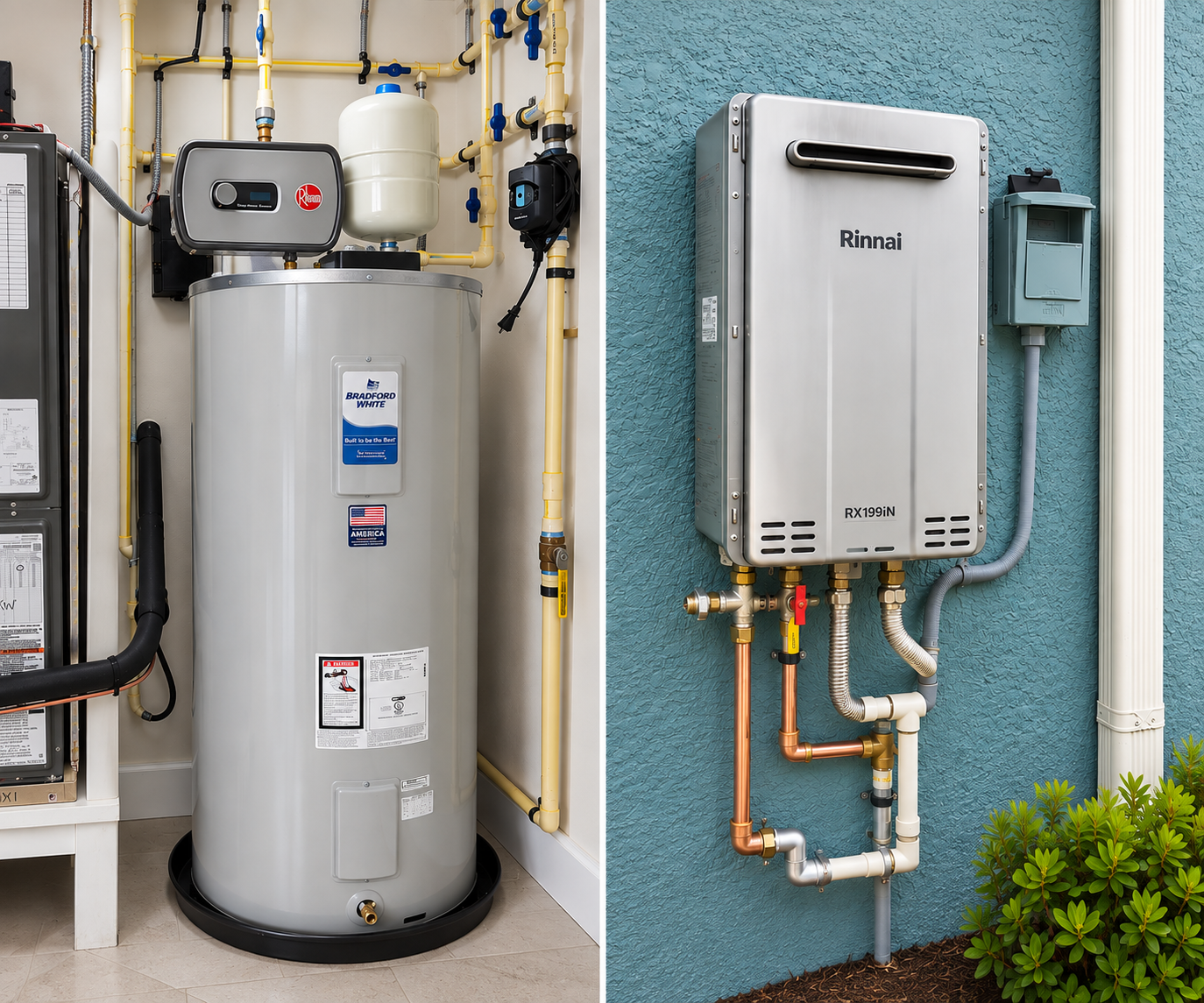
Traditional tank water heaters
Tankless water heaters
High-efficiency models
Heat pump or hybrid electric water heaters
For example, ENERGY STAR reports that certified heat pump water heaters can use substantially less electricity than standard electric models, although installation requirements and upfront costs are different.
The best option depends on the house and the homeowner—not simply which model has the most features.
Bryan can help determine what is practical for the existing plumbing, electrical or gas setup, available space, and expected hot-water use.
Don't Wait Until You're Completely Out of Hot Water
Most homeowners don't spend much time thinking about their water heater until something goes wrong.
Understandably.
But if you already know your unit is older or its performance is beginning to change, having it looked at before it becomes an emergency gives you more time to understand your options.
It can also make the repair-versus-replacement decision much less stressful.
Planning ahead is one reason ENERGY STAR encourages homeowners with aging water heaters to consider replacement before a failure forces an immediate decision.
Need Help Deciding Whether to Repair or Replace Your Water Heater?
You don't have to diagnose the problem yourself.
Cross County Plumbing & Drain provides water heater service, repair, and replacement throughout Nocatee, Ponte Vedra, St. Johns, Jacksonville Beaches, St. Augustine, and surrounding Northeast Florida communities.
Bryan will evaluate the water heater, explain what he finds, and go over the available options so you can make an informed decision about your home.
Have a water heater that's giving you trouble—or one that's simply getting older?
Learn more about our water heater services, Call Cross County Plumbing & Drain at 904-569-6700 or visit crosscountyplumbing.com to learn more.
Florida Certified Plumbing Contractor — CFC1434349